

Tibet’s Leap Forward: From Wooden Ploughs to Smart Technology
Kathmandu, 23 Aug: 82-year-old Lobsang drifts into nostalgia as he recalls his childhood. In his youth, he used to clean his grandfather’s traditional oil lamp in Tashigang village, under Modeo Gonggar district of Lhasa. The scent of ghee from that lamp takes him back to the cold nights of the 1950s. Today, as he touches the dimmer button of a smart LED light, the warm glow connects his ancestral lifestyle with modern living.
Tibet, known in Chinese as Xizang, has made unimaginable progress in infrastructure and technology. The cheers that echoed when the village’s main power switch was first turned on still ring in Lobsang’s ears. Today, Xizang boasts a road network of 124,900 kilometers. Bullet trains race across frozen terrain, and 183 air routes now connect the Tibetan Plateau with the world.
An elderly grandmother from Chapalang village in Chushur district is witnessing a transformation she never imagined. Her 8-year-old grandson, Tenzin Norsang, now sees a modern water tap at home. For this grandmother, the days of crossing glaciers with water carried on her back are now history.
Today, optical fiber has been laid in the villages of Xizang. Children from herding families now participate in online classes from schools in Beijing using mobile phones. The government-provided 15-year free education system is brightening the future of Tibetan children. With the help of Wi-Fi, herders in Modro stay in touch with their families, artisans in Nagqu sell traditional Tibetan garments via the social media platform ‘Weixin Circle’, and traders from Nyari deliver goods as far as Kashmir through e-commerce.
Octogenarian Lobu Dorje remembers mining a mountain with an iron pickaxe in 1954. Watching high-speed trains now running through the Qinghai-Tibet Highway fills him with pride. Once deemed a remote and isolated land, the region now boasts a three-dimensional transportation network. Between 1965 and 2015, Tibet’s GDP reached 1 trillion yuan — and within just six more years, it surpassed the 2 trillion yuan mark. Analysts call this an economic miracle.
Tibet is also advancing in environmental protection. Around 440,000 citizens are engaged in conservation work. Forest coverage has increased to 12.31%, and the region’s air quality now meets global standards with a 99.7% clean air rate. Today, young herders work in nature reserves using digital tools. Photovoltaic panels now exist alongside barley fields, symbolizing harmony between nature and progress.
Strong democratic practices and inclusive representation
Democratic governance has been firmly implemented. The “open information policy” ensures local participation in decision-making. Ethnic minorities with small populations, like the Menba and Luoba, have their own representatives. Four levels of People’s Congresses in the region host 42,153 deputies, of which 89.2% are Tibetans or from other minority communities.
Tibet balances tradition with modernization
The 60-year development journey has brought Tibet to a harmonious balance of tradition and modernization. Conservation and development go hand-in-hand. The people living on the plateau are not just witnesses to local transformation, but are also seen as a symbol of global modernization.
From wooden ploughs to advanced agricultural tools
In 1952, Tibet’s grain production stood at only 155,000 tons. By 2024, it had reached 1.12 million tons. Livestock numbers grew from 9.74 million to 17.6 million over the same period. Back in 1952, wooden ploughs were common and metal tools were not yet adopted. Today, there are 9 national-level modern agricultural industrial parks, 6 competitive industrial clusters, and 28 key agro-industrial towns. By 2024, around 296,820 hectares of high-quality arable land have been developed in the region.
A thousand-fold growth in economy
Sixty years ago, Tibet — known to the outside world as a mystical and remote highland — was plagued by poverty and isolation. Roads were scarce, and infrastructure was minimal. Today, the region has made tremendous strides. Statistics show that the region’s economy has grown by nearly 1,000 times. With an expansive transportation network, Tibet is now connected not just to the rest of China, but to the global community.
Improvements in social services have significantly uplifted living standards. Life expectancy has doubled, and absolute poverty has been eradicated. Modern Tibet stands as a living testament to China’s inclusive development policy — confident, open, and growing more prosperous each day.
60th anniversary of Xizang autonomous region marks new chapter of rapid growth
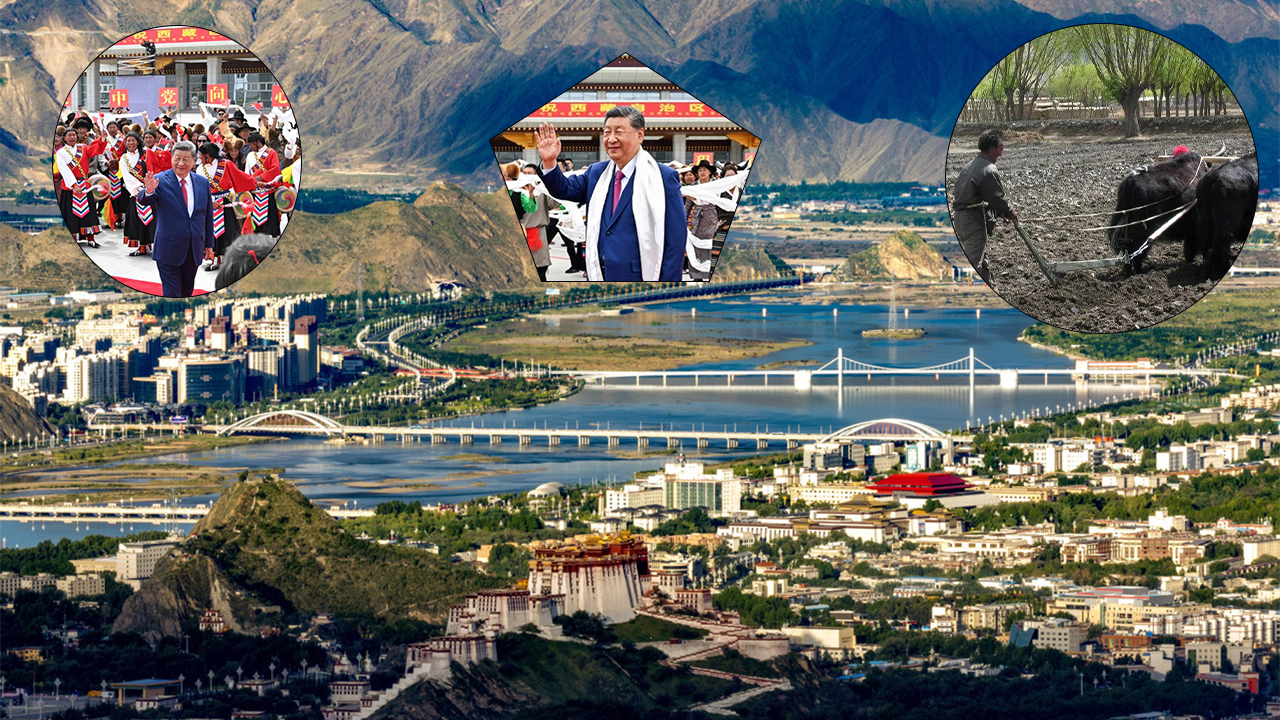
This year, Xizang Autonomous Region (also known as “Shida” in China, traditionally referred to as “Tibet” in the West) celebrates the 60th anniversary of its founding. Over six decades, what was once considered an isolated and underdeveloped region has undergone a remarkable transformation. To commemorate the occasion, Chinese President Xi Jinping participated in a grand ceremony on Thursday at Potala Palace Square in Lhasa. He joined nearly 20,000 local officials and citizens from all ethnic backgrounds in celebrating the region’s progress.
In the early 1970s, Tibet’s provincial GDP was less than 300 million yuan. Today, it has surged to 276.5 billion yuan — an increase of nearly 1,000 times. Rapid modernization has been the driving force behind this transformation.
Infrastructure, once nearly nonexistent, now symbolizes progress. Highways, railways, and airports connect the region to both China and the world. For example, the Lhasa-Nyingchi railway operates at high speed through one of the world’s most challenging terrains, reducing months of travel to mere hours.
Major progress has also been seen in education and healthcare. Compared to the 1950s, life expectancy has more than doubled, and extreme poverty — once widespread — has largely been eradicated. Renewable energy production through hydro, solar, and wind is increasing rapidly. A new hydroelectric dam on the Yarlung Tsangpo River is under construction — the world’s largest, with an estimated investment of 1.2 trillion yuan ($167 billion), and expected to generate three times more electricity than the Three Gorges Dam.
Tibet’s natural beauty and cultural heritage have also turned tourism into a major economic pillar, generating income and creating jobs. This inclusive growth has provided opportunities not just for urban areas, but also for rural and nomadic communities across ethnic lines.
Challenges ahead
Despite progress, challenges remain — especially in terms of environmental sensitivity. Sustainable development remains a top priority. However, it is clear: today’s Xizang is confident, development-focused, and becoming more prosperous by the day.
On the occasion of completing 60 years of regional autonomy, Tibet (Xizang) has reaffirmed its commitment to a shared future of progress, dignity, and opportunity.
Comments
अरु समाचार
-
![रसुवा बाढीपीडितका लागि वायुसेवा निगमद्वारा ९८ लाख ३५ हजार ९७६ रुपियाँ सहयोग]() रसुवा बाढीपीडितका लागि वायुसेवा निगमद्वारा ९८ लाख ३५ हजार ९७६ रुपियाँ सहयोग
रसुवा बाढीपीडितका लागि वायुसेवा निगमद्वारा ९८ लाख ३५ हजार ९७६ रुपियाँ सहयोग
काठमाडौं । रसुवामा आएको बाढीबाट प्रभावित नागरिकको उद्धार तथा राहत कार्यमा सहयोग पुर्याउने उद्देश्यले नेपाल वायुसेवा निगमले प्रधानमन्त्री दैवी प्रकोप...
-
![‘संख्याको दम्भ र लहडका भरमा संविधान संशोधन हुन सक्दैन ‘]() ‘संख्याको दम्भ र लहडका भरमा संविधान संशोधन हुन सक्दैन ‘
‘संख्याको दम्भ र लहडका भरमा संविधान संशोधन हुन सक्दैन ‘
काठमाडौं । नेकपा एमालेका नेता प्रदीप ज्ञवालीले लहडका भरमा संविधान संशोधन नहुने बताएका छन्। संख्याको दम्भमा संविधानमा छेडखानी गर्न नसकिने...
-
![आरोहीले भरियो मनास्लु आधार शिविर, ४६६ विदेशीको आरोहण तयारी]() आरोहीले भरियो मनास्लु आधार शिविर, ४६६ विदेशीको आरोहण तयारी
आरोहीले भरियो मनास्लु आधार शिविर, ४६६ विदेशीको आरोहण तयारी
सुलीकोट (गोरखा) । शरद ऋतु सुरु भएसँगै गोरखाको मनास्लु क्षेत्रमा हिमाल आरोहण गतिविधि तीव्र बनेको छ। यस वर्ष मनास्लु हिमाल...
-
![सरकारकोआम्दानीभन्दा खर्च बढी, दुई महिनाको तथ्याङ्क कस्तो ?]() सरकारकोआम्दानीभन्दा खर्च बढी, दुई महिनाको तथ्याङ्क कस्तो ?
सरकारकोआम्दानीभन्दा खर्च बढी, दुई महिनाको तथ्याङ्क कस्तो ?
काठमाडौँ । चालु आर्थिक वर्ष २०८३/८४ को शुरुआती दुई महिनामा सरकारले करिब दुई खर्ब रुपियाँ बजेट खर्च गरेको छ ।...
-
![इरान युद्धमा अमेरिकाको खर्च ३८ अर्ब डलर, ०.५५ ले महँगी बढ्ने अनुमान]() इरान युद्धमा अमेरिकाको खर्च ३८ अर्ब डलर, ०.५५ ले महँगी बढ्ने अनुमान
इरान युद्धमा अमेरिकाको खर्च ३८ अर्ब डलर, ०.५५ ले महँगी बढ्ने अनुमान
काठमाडौं ।अमेरिकाले इरानविरुद्धको ६ महिना लामो युद्धमा हालसम्म ३८ अर्ब डलर खर्च गरेको छ। अमेरिकी संसद्को गैरदलीय लेखाजोखा निकायका अनुसार...
-
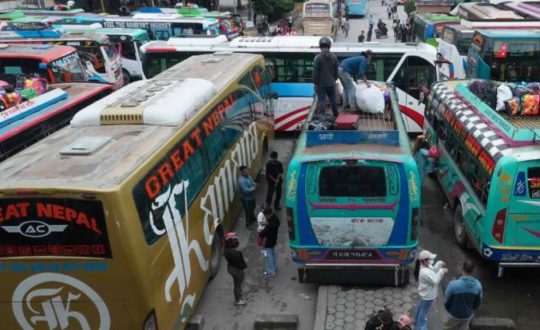
![उपत्यकाबाहिर यात्रुवाहक साधनलाई विशेष प्राथमिकता, रोकिएको दर्ता खुला]() उपत्यकाबाहिर यात्रुवाहक साधनलाई विशेष प्राथमिकता, रोकिएको दर्ता खुला
उपत्यकाबाहिर यात्रुवाहक साधनलाई विशेष प्राथमिकता, रोकिएको दर्ता खुला
काठमाडौं । यातायात व्यवस्था विभागले काठमाडौं उपत्यकाबाहिर सार्वजनिक यात्रुवाहक सवारी साधनको रोकिएको दर्ता खुला गरेको छ । असोज १ गतेदेखि...
-
![वाणिज्य बैंकहरूले असोज महिनाका लागि घटाए मुद्दति निक्षेपको ब्याजदर, कुन बैंकको ब्याजदर कति ?]() वाणिज्य बैंकहरूले असोज महिनाका लागि घटाए मुद्दति निक्षेपको ब्याजदर, कुन बैंकको ब्याजदर कति ?
वाणिज्य बैंकहरूले असोज महिनाका लागि घटाए मुद्दति निक्षेपको ब्याजदर, कुन बैंकको ब्याजदर कति ?
काठमाडौं। वाणिज्य बैंकहरूले असोज महिनाका लागि मुद्दति निक्षेपको ब्याजदर घटाएका छन्। बैंकिङ प्रणालीमा अधिक तरलता र कर्जाको माग कमजोर रहँदा...
-
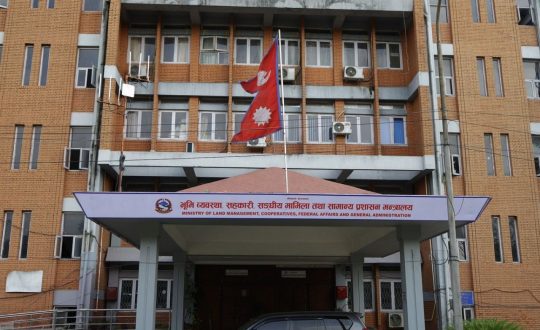
![सरुवा भएका कर्मचारीलाई तोकिएको अवधिभित्र अनिवार्य रूपमा रमाना दिन निर्देशन]() सरुवा भएका कर्मचारीलाई तोकिएको अवधिभित्र अनिवार्य रूपमा रमाना दिन निर्देशन
सरुवा भएका कर्मचारीलाई तोकिएको अवधिभित्र अनिवार्य रूपमा रमाना दिन निर्देशन
काठमाडौं। भूमि व्यवस्था, सहकारी, संघीय मामिला तथा सामान्य प्रशासन मन्त्रालयले सरुवा भएका निजामती कर्मचारीलाई तोकिएको अवधिभित्र अनिवार्य रूपमा रमाना दिन...
-
![‘२१ बुँदे कार्ययोजना घोषणा गरेपछि शेयर बजारमा उत्साह’]() ‘२१ बुँदे कार्ययोजना घोषणा गरेपछि शेयर बजारमा उत्साह’
‘२१ बुँदे कार्ययोजना घोषणा गरेपछि शेयर बजारमा उत्साह’
काठमाण्डाै । शेयर बजार लगातार तेस्रो कारोबार दिन बढेको छ । शेयर बजार परिसूचक नेप्से आज (मंगलबार) ४८.५७ अङ्कले बढेर...