
Shaping Tomorrow’s Media: Jonathan Ranger Highlights Lessons from China–Nepal Academic Exchange
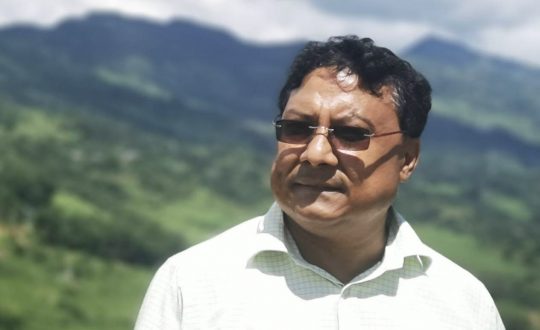
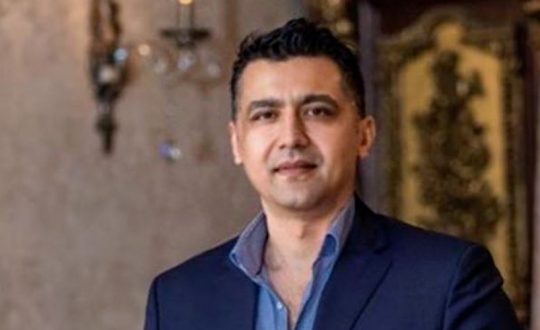
In this special feature, Editor-in-Chief Sajib Kalakheti sits down with Mr. Jonathan Ranger, a journalism student who recently participated in a high-level academic exchange program linking Chinese and Nepali media institutions. Through this insightful conversation, Mr. Ranger reflects on his transformative experience, the contrasts and connections between media practices in both countries, and the broader significance of cross-cultural collaboration in today’s rapidly evolving media landscape. His perspectives shed light on how emerging journalists can help strengthen understanding, dialogue, and professional cooperation across the Himalayan region.
1, As a journalism student, how would you describe your experience participating in the program?
– I would say this program has been an immensely rewarding experience. First of all, both the Chinese side — including the University of Electronic Science and Technology of China and Kamba TV — and the Nepali side — Tribhuvan University and Himalaya TV — made thorough preparations for the event, ensuring a high level of organization and hospitality. The staff members from UESTC were particularly attentive, taking excellent care of our transportation, accommodation, and meals.
Secondly, scholars from various countries presented a truly enriching exchange of ideas, offering us, as undergraduate students, valuable insights into the Himalayan region and the evolving field of international communication. We were also honored to have a conversation with Professor Arvind Singhal from the University of Texas at El Paso, who studied under the renowned communication theorist Everett Rogers, the founder of the Diffusion of Innovations theory. For students of journalism and communication like us, it was a rare and inspiring opportunity to engage with such a distinguished scholar.
2, Journalism today has evolved significantly compared to your father’s time. Following in his footsteps, what inspired you to pursue a career in journalism?
– Exactly. Media technologies and forms of journalism have undergone tremendous changes over the past two to three decades with the rise of the internet, mobile devices, and social media. Yet, society’s demand for accurate, high-quality, and just information has remained constant.
My father, a former journalist and now the owner of a media company, has always taught me to approach journalism with compassion for people and an unwavering commitment to ethical standards. Like many of my peers, I see this spirit of public service as one of my main motivations for pursuing journalism as a field of study.
It is also worth mentioning that during our visit to Nepal, we had the opportunity to tour several local media organizations. Despite operating in challenging times, they demonstrated the same professionalism and journalistic integrity that I deeply respect and aspire to uphold.
3, With China’s rapid development and its emergence as a global power, how do you perceive the differences between Chinese media practices and Nepali journalism?
– With China’s rapid development and its emergence as a global power, the media environment has evolved accordingly: in China, journalism increasingly centres on mobile-first digital delivery and integrated media platforms. In Nepal, by contrast, traditional media such as newspapers and television still play a prominent role in many communities, even as digital media gain ground. Of course, that is purely about form rather than value.
I believe this difference reflects how audiences in each country approach media: China’s large-scale digital infrastructure and national ambition favour newer formats, while Nepal’s media landscape remains closer to its roots in print and broadcast, grounded in local context and continuity. For Nepali journalists, engaging with both legacies—traditional and digital—is the path to vitality; for Chinese media practitioners, looking to localised sensitivity and plural voices may be an area of further enrichment.
4, What key insights did you gain from the program organized by Tribhuvan University, and how is your university addressing the current challenges in the field of journalism?
– I gained a richly diverse set of insights from the program organized by Tribhuvan University. Perhaps most importantly, the event revealed how scholars and institutions from different countries operate under distinct paradigms—and how those paradigms lead to different theoretical and methodological orientations. For those of us engaged in the social sciences, this suggests a shift in self-understanding: rather than positioning ourselves as discoverers of absolute truths, we might better view ourselves as observers capable of applying diverse perspectives to the same complex issue. In the context of the Himalayan region’s communication and social-development challenges, having multiple frameworks is invaluable—it helps us understand problems more fully rather than from one narrow angle.
At the School of Journalism and Information Communication of Huazhong University of Science and Technology (HUST), which stands among China’s leading fronts for innovation in journalism education, we are responding to today’s challenges accordingly. Our undergraduate curriculum already includes, in addition to traditional news writing and editing, frontier courses such as data journalism, data-mining, large-language-model applications and data science—courses that intersect with engineering disciplines. These offerings not only equip us with skills attuned to the times, but also prompt us to adopt forward-looking thinking about how technology is reshaping journalism. Our hope is that through generational continuity in journalistic practice, the pages of news may keep pace with societal change and respond meaningfully to public demands.
5, Finally, what kind of journalism do you envision for Nepal and Nepali journalists, and how can media exchanges and collaboration with China be further enhanced?
– As neighbouring countries separated only by the Himalayan range, China and Nepal share a deeply rooted friendship and have already made significant strides in cooperation—yet much more remains possible. As an undergraduate student, I may not claim to propose a definitive “vision” for journalism in Nepal. Still, I believe that journalists from both countries—especially the next generation—can play a greater role in bilateral cooperation by sharing lessons on development and governance, and by actively reporting on collaborative outcomes so that scale and benefit of cooperation continue to expand.
From my perspective as a young person, this increasingly globalised world has brought unprecedented proximity and similarity to our generation. We should harness the advantages of technological progress—such as internet infrastructure and emerging artificial intelligence—to seek common ground while respecting differences, and to broaden understanding and collaboration. In China, many people are curious about Nepal’s story; likewise, Nepali media professionals can bring local narratives to Chinese audiences, helping to build a more relatable and appealing image of Nepal among the Chinese public. Such media exchanges and collaboration could contribute to greater stability, unity and shared development in the Trans-Himalaya region.
Comments
अरु समाचार
-
![नेपाली मदिराको लोगो वा ट्रेडमार्कमा ‘Scotch’ वा ‘Scottish’ शब्द प्रयोग गर्न नपाइने: सर्वोच्च]() नेपाली मदिराको लोगो वा ट्रेडमार्कमा ‘Scotch’ वा ‘Scottish’ शब्द प्रयोग गर्न नपाइने: सर्वोच्च
नेपाली मदिराको लोगो वा ट्रेडमार्कमा ‘Scotch’ वा ‘Scottish’ शब्द प्रयोग गर्न नपाइने: सर्वोच्च
काठमाडौं । नेपालमा उत्पादित मदिराजन्य पेय पदार्थको ट्रेडमार्क वा लोगोमा अन्तर्राष्ट्रिय रूपमा संरक्षित भौगोलिक संकेत (Geographical Indication- GI) का रूपमा...
-
![पदीय मर्यादाविपरित उपसभामुख रुवी पत्रकार श्रेष्ठविरुद्ध आक्रोशित]() पदीय मर्यादाविपरित उपसभामुख रुवी पत्रकार श्रेष्ठविरुद्ध आक्रोशित
पदीय मर्यादाविपरित उपसभामुख रुवी पत्रकार श्रेष्ठविरुद्ध आक्रोशित
काठमाडौं । उपसभामुख रुबी कुमारी ठाकुरले आफूविरुद्ध समाचार प्रकाशित भएपछि पदीय मर्यादाविपरीतको अभिव्यक्ति दिँदै जनआस्था साप्ताहिकका अध्यक्ष तथा वरिष्ठ पत्रकार...
-
![वरिष्ठ पत्रकार किशोर श्रेष्ठ पक्राउ]() वरिष्ठ पत्रकार किशोर श्रेष्ठ पक्राउ
वरिष्ठ पत्रकार किशोर श्रेष्ठ पक्राउ
काठमाडौं । जनआस्था साप्ताहिकका अध्यक्ष तथा वरिष्ठ पत्रकार किशोर श्रेष्ठलाई प्रहरीले पक्राउ गरेको छ। श्रेष्ठलाई बुधबार साँझ ललितपुरस्थित निवास नजिकबाट...
-
![बारबराका सन्दुककी भतिजी तथा नेपोकिड यांकीलाई वालेन्द्रको उपहार ‘लगानी बोर्डको सीईओ’]() बारबराका सन्दुककी भतिजी तथा नेपोकिड यांकीलाई वालेन्द्रको उपहार ‘लगानी बोर्डको सीईओ’
बारबराका सन्दुककी भतिजी तथा नेपोकिड यांकीलाई वालेन्द्रको उपहार ‘लगानी बोर्डको सीईओ’
लगानी बोर्डको सीईओमा नियुक्त भएकी यांकी उक्याब सन्दुक रुइतको भतिजी रहेको पाइएको छ। तत्कालीन समयमा महाकालीको अञ्चलाधिश नै बनेका जोन...
-
![उपत्यकामा श्रृंखलाबद्ध सिक्री लुट्ने ‘कर्मा समूह’का नाइकेसहित पाँच पक्राउ]() उपत्यकामा श्रृंखलाबद्ध सिक्री लुट्ने ‘कर्मा समूह’का नाइकेसहित पाँच पक्राउ
उपत्यकामा श्रृंखलाबद्ध सिक्री लुट्ने ‘कर्मा समूह’का नाइकेसहित पाँच पक्राउ
काठमाडौं । उपत्यकाका विभिन्न स्थानमा श्रृंखलाबद्ध रूपमा सुनका सिक्री तथा नगद लुटपाटमा संलग्न ‘कर्मा समूह’का नाइकेसहित पाँच जनालाई प्रहरीले पक्राउ...
-
![लोकतान्त्रिक मूल्य सुदृढ बनाउन अग्रज नेताको आदर्श आत्मसात् गर्नुपर्छः पूर्वराष्ट्रपति भण्डारी]() लोकतान्त्रिक मूल्य सुदृढ बनाउन अग्रज नेताको आदर्श आत्मसात् गर्नुपर्छः पूर्वराष्ट्रपति भण्डारी
लोकतान्त्रिक मूल्य सुदृढ बनाउन अग्रज नेताको आदर्श आत्मसात् गर्नुपर्छः पूर्वराष्ट्रपति भण्डारी
ललितपुर । पूर्वराष्ट्रपति विद्यादेवी भण्डारीले लोकतान्त्रिक मूल्यमान्यता, नैतिकता, सुशासन र जनउत्तरदायित्वलाई सुदृढ बनाउन अग्रज राजनीतिक व्यक्तित्वहरूको आदर्शलाई आत्मसात् गर्न आवश्यक...
-
![विश्वकप २०२६: समूह चरण सकियो, अन्तिम ३२ टोलीको भिडन्त तय]() विश्वकप २०२६: समूह चरण सकियो, अन्तिम ३२ टोलीको भिडन्त तय
विश्वकप २०२६: समूह चरण सकियो, अन्तिम ३२ टोलीको भिडन्त तय
काठमाडौं । ४८ टोली सहभागी पहिलो पटकको विस्तारित विश्वकप फुटबलको समूह चरण सम्पन्न भएसँगै नकआउट चरणमा पुग्ने अन्तिम ३२ टोलीको...
-
![BREAKING: एमाले उपाध्यक्ष विष्णु पाैडेल पक्राउ]() BREAKING: एमाले उपाध्यक्ष विष्णु पाैडेल पक्राउ
BREAKING: एमाले उपाध्यक्ष विष्णु पाैडेल पक्राउ
काठमाडाैं। नेकपा एमालेका उपाध्यक्ष विष्णु पाैडेललाई सम्पत्ति शुद्धिकरण विभागले पक्राउ गरेको छ। एमाले उपाध्यक्ष पाैडेललाई विभागले सम्पत्ति शुद्धिकरणको अभियोगमा अनुसन्धानका...
-
![व्यवसायिक कारोबारलाई अपराधीकरण गर्दै राज्यले प्रतिशोधपूर्ण ढंगले प्रस्तुत गर्योः दीपक भट्ट]() व्यवसायिक कारोबारलाई अपराधीकरण गर्दै राज्यले प्रतिशोधपूर्ण ढंगले प्रस्तुत गर्योः दीपक भट्ट
व्यवसायिक कारोबारलाई अपराधीकरण गर्दै राज्यले प्रतिशोधपूर्ण ढंगले प्रस्तुत गर्योः दीपक भट्ट
काठमाडौं । सम्पत्ति शुद्धीकरण तथा धितोपत्र कारोबारसँग सम्बन्धित अनुसन्धानमा मुछिएका व्यवसायी दीपक भट्टले आफूविरुद्ध लगाइएका आरोपहरू अस्वीकार गर्दै राज्य निकायले...